Yard habits that reduce tick activity in Springboro and Franklin, Ohio, plus when professional barrier treatments make sense.
Ticks have become more of a year-round concern in Southwest Ohio than they used to be, and yards with more tree cover, tall grass, or brushy edges — common in both Springboro and Franklin — tend to see more tick activity than open, mowed lots.
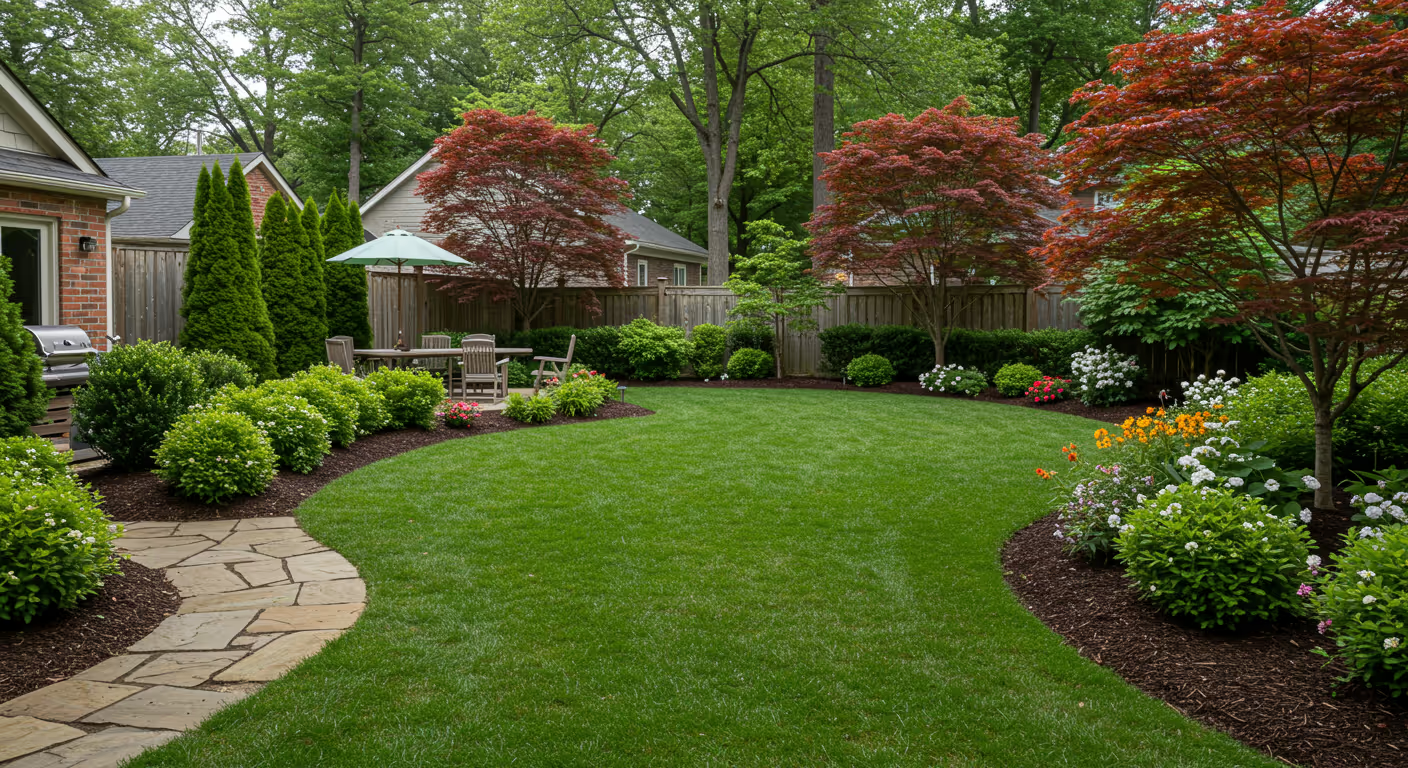
A few things make a real difference before you even think about treatment. Keeping grass mowed short and trimming back brush at the edge of wooded areas removes the humid, shaded conditions ticks need to survive. Creating a clear buffer of mulch or gravel between lawn and wooded areas also helps, since ticks generally don't cross dry, open surfaces to get to your yard.
Deer and rodent activity is a major factor too — both carry ticks into yards, so anything that reduces those visitors (secured trash, no bird feeders dropping seed on the ground, fencing off garden beds deer favor) indirectly reduces tick exposure as well.
For active tick pressure, professional barrier treatments applied to the perimeter of the yard, brushy edges, and shaded resting areas are the most effective option, typically reapplied every 3–4 weeks through tick season, which in Ohio runs from early spring through the first hard frost in fall.
If you or a pet spend time in Springboro's or Franklin's wooded lots, a daily tick check after being outside is still one of the simplest, most effective habits — most tick-borne illness risk goes up the longer a tick stays attached.
Poff's offers tick control as part of our outdoor pest programs for Springboro, Franklin, and the rest of Warren County — reach out for a free property assessment.
The most effective approach combines eliminating standing water breeding sites with professional barrier spray treatments applied every 3-4 weeks during mosquito season. Remove water from gutters, bird baths, flower pots, and low spots in your lawn, then treat shaded resting areas like shrubs, fences, and under decks.
Both are solid choices, but concrete pavers generally outperform poured concrete in Ohio's freeze-thaw climate. Pavers flex slightly with temperature changes without cracking, and individual pavers can be replaced if damaged. Poured concrete is lower upfront cost but more prone to cracking and harder to repair over time.
You can request a quote by calling us directly, filling out the contact form on our website, or sending us a message online. We typically respond within one business day.
Yes, Poff's Lawn Care is fully licensed and insured in the state of Ohio, giving homeowners complete peace of mind on every project.
Yes — Poff's Lawn Care offers free on-site estimates for landscaping, hardscape, and outdoor pest control projects across our entire service area.
Poff's Lawn Care serves Lebanon, Mason, Springboro, Waynesville, Franklin, and Centerville, Ohio and the surrounding Warren County area.
Most professional outdoor treatments are safe for children and pets once the product has fully dried, which typically takes 30–60 minutes. Always ask your provider what products they use and request pet and child-safe formulations if needed.
Concrete pavers and natural stone are the best options for Ohio's freeze-thaw climate. They allow for slight movement during temperature changes without cracking — making them ideal for Warren County winters where repeated freezing and thawing can damage poured concrete over time.
Landscaping refers to the living elements of your outdoor space — plants, trees, shrubs, grass, and garden beds. Hardscaping covers the non-living structural elements like patios, walkways, retaining walls, and fire pits. Most complete outdoor projects combine both.